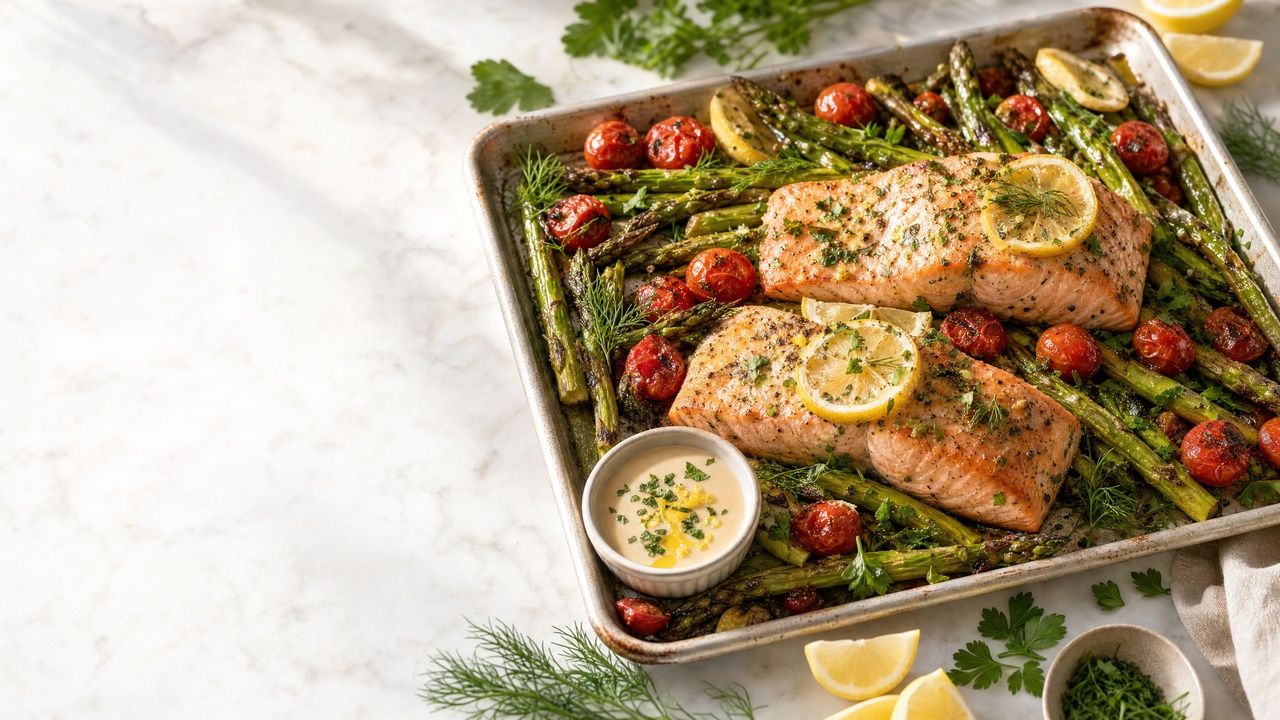
Lemon Herb Baked Salmon & Roasted Veggies
The problem most people run into with salmon is that they either overcook it, underseason it, or feel like they need a complicated recipe to make it worth eating.
This recipe solves all of that.
It is a simple, sheet-pan dinner that comes together in 30 minutes from start to finish. One pan, minimal prep, and a flavor profile — bright lemon, fresh herbs, garlic, and a drizzle of olive oil — that makes the salmon taste like something you'd order at a restaurant.
The bonus Lemon Tahini Drizzle at the end takes the whole dish to another level. It is creamy, tangy, and takes about 3 minutes to make. Once you try it, you'll want to put it on everything.
Let's get into it.
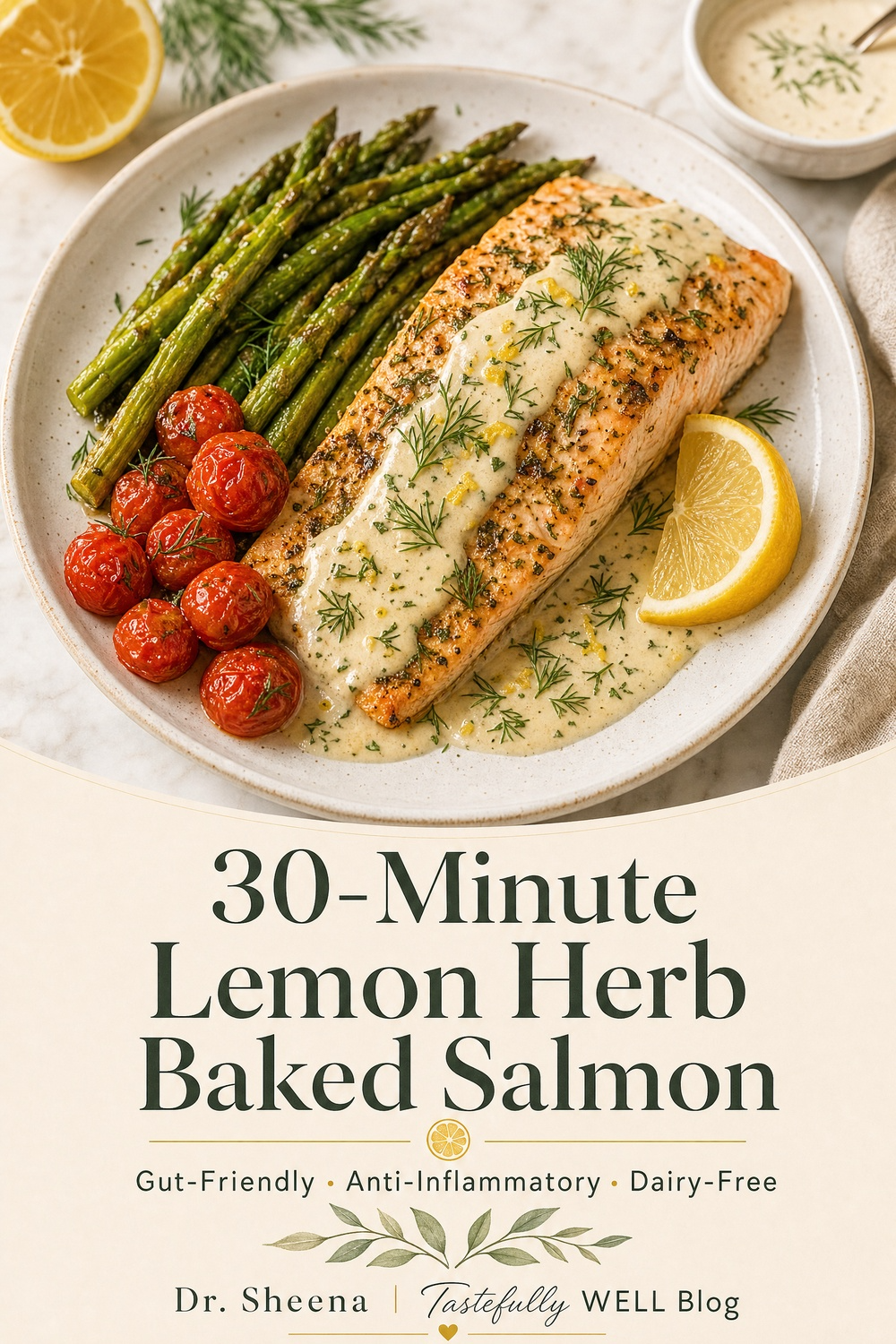
Lemon Herb Baked Salmon with Garlic Roasted Asparagus & Cherry Tomatoes
Gluten-Free · Dairy-Free · Anti-Inflammatory · Ready in 30 Minutes
Yield: 2 servings (easily doubled)
Prep Time: 8 minutes
Cook Time: 18–22 minutes
Total Time: 30 minutes
Ingredients
For the salmon:
- 2 wild-caught salmon fillets (6 oz each), skin-on or skinless
- 2 tbsp extra virgin olive oil
- 2 garlic cloves, minced
- Zest and juice of 1 large lemon
- 1 tbsp fresh dill, chopped (or 1 tsp dried dill)
- 1 tbsp fresh parsley, chopped
- 1 tsp fresh thyme leaves (or ½ tsp dried thyme)
- ½ tsp sea salt
- ¼ tsp black pepper
- ¼ tsp smoked paprika
For the roasted vegetables:
- 1 bunch asparagus, woody ends trimmed
- 1 cup cherry tomatoes
- 1 tbsp extra virgin olive oil
- 2 garlic cloves, minced
- Sea salt and black pepper to taste
- Optional: a pinch of red pepper flakes
For serving:
- Lemon Tahini Drizzle (recipe below)
- Extra lemon wedges
- Fresh dill or parsley for garnish
Instructions
Step 1 — Preheat and prep:
Preheat your oven to 400°F. Line a large baking sheet with parchment paper. If your salmon fillets are cold from the fridge, let them sit at room temperature for 5–10 minutes while you prep the other ingredients — this helps them cook more evenly.
Step 2 — Make the lemon herb marinade:
In a small bowl, whisk together the olive oil, minced garlic, lemon zest, lemon juice, dill, parsley, thyme, salt, pepper, and smoked paprika. Set aside.
Step 3 — Prep the vegetables:
Toss the asparagus and cherry tomatoes with olive oil, minced garlic, salt, pepper, and red pepper flakes if using. Spread them on one side of the prepared baking sheet in a single layer.
Step 4 — Season the salmon:
Place the salmon fillets on the other side of the baking sheet. Spoon the lemon herb marinade generously over the top of each fillet, making sure to coat the entire surface.
Step 5 — Roast:
Roast at 400°F for 18–22 minutes, depending on the thickness of your fillets. The salmon is done when it flakes easily with a fork and the thickest part is opaque throughout. The asparagus should be tender with slight char at the tips, and the cherry tomatoes should be blistered and beginning to burst.
Tip: For a slightly caramelized top, switch the oven to broil for the last 2 minutes of cooking. Watch it closely — it goes from perfect to overdone quickly.
Step 6 — Plate and serve:
Divide the salmon and roasted vegetables between two plates. Drizzle generously with the Lemon Tahini Sauce and garnish with fresh dill or parsley and extra lemon wedges.
Why This Recipe Works for Your Gut
Wild-caught salmon is one of the richest dietary sources of omega-3 fatty acids — specifically EPA and DHA, the two forms of omega-3 that the body uses most efficiently. These fatty acids are among the most well-researched anti-inflammatory compounds available, and they play a direct role in supporting the integrity of the gut lining. A healthy gut lining is the foundation of good digestion, immune function, and overall wellbeing.
Asparagus is one of the best prebiotic vegetables you can eat. It contains inulin, a type of soluble fiber that specifically feeds and supports the growth of beneficial bacteria like Lactobacillus and Bifidobacterium in the gut. It is also rich in folate, vitamin K, and glutathione — one of the body's most powerful antioxidants.
Cherry tomatoes provide lycopene, a potent antioxidant carotenoid that has been shown to reduce markers of inflammation in the gut and throughout the body. Roasting tomatoes actually increases the bioavailability of lycopene, making this cooking method ideal for maximizing their anti-inflammatory benefit.
Garlic is a powerful prebiotic and natural antimicrobial. It contains fructooligosaccharides (FOS), a type of prebiotic fiber that feeds beneficial gut bacteria, as well as allicin — the compound responsible for garlic's well-known immune-supporting and anti-inflammatory properties.
Extra virgin olive oil is the cornerstone of the anti-inflammatory diet for good reason. It is rich in oleocanthal, a natural compound that works similarly to ibuprofen in the body by inhibiting the same inflammatory enzymes — without any of the side effects.
Bonus Recipe: Lemon Tahini Drizzle
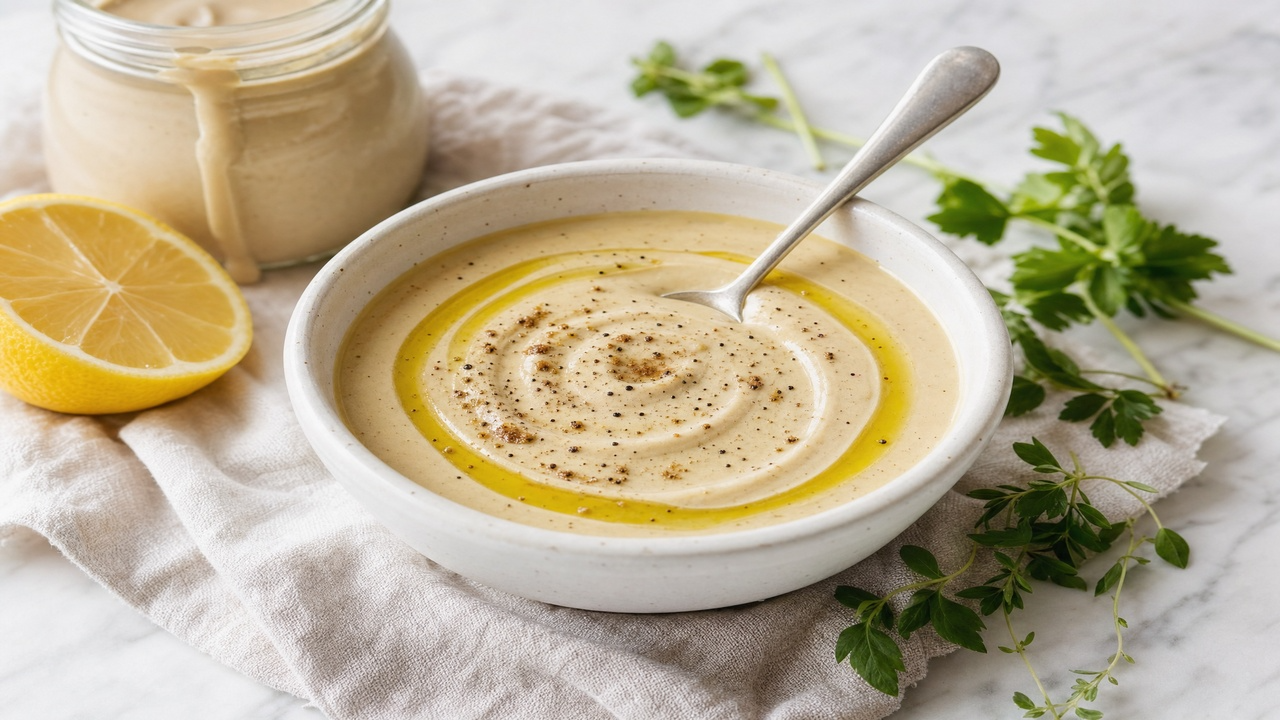
Gluten-Free · Dairy-Free · Vegan · Ready in 3 Minutes
Yield: About ½ cup (enough for 2–4 servings)
Prep Time: 3 minutes
Total Time: 3 minutes
Ingredients:
- 3 tbsp tahini (well-stirred)
- 2 tbsp fresh lemon juice (about 1 small lemon)
- 1 small garlic clove, grated or finely minced
- 2–3 tbsp warm water (to thin to desired consistency)
- 1 tbsp extra virgin olive oil
- ½ tsp sea salt
- ¼ tsp cumin (optional but recommended)
- A pinch of black pepper
Instructions:
1.In a small bowl, whisk together the tahini, lemon juice, and garlic until combined. The mixture will seize up and look thick — this is normal.
2.Add the warm water one tablespoon at a time, whisking after each addition, until the sauce reaches a smooth, pourable consistency. You may need 2–4 tablespoons depending on your tahini brand.
3.Whisk in the olive oil, salt, cumin, and black pepper.
4.Taste and adjust — more lemon for brightness, more water to thin, more salt to bring out the flavor.
5.Drizzle over the plated salmon and vegetables just before serving.
Storage tip: Store in a sealed jar in the fridge for up to 5 days. The sauce will thicken as it sits — just add a splash of warm water and whisk to loosen before using.
Make It a Meal Prep Win
This recipe doubles beautifully for meal prep. Roast two extra salmon fillets and a larger batch of vegetables on Sunday, and you have the base for two additional meals during the week:
Salmon grain bowl: Flake the leftover salmon over a bed of cauliflower rice or quinoa, add the roasted veggies, and drizzle with the Lemon Tahini Sauce.
Salmon salad: Break the leftover salmon into chunks and toss with mixed greens, cucumber, avocado, and a squeeze of lemon for a quick, protein-rich lunch.
Stuffed avocado: Mix flaked salmon with a spoonful of the tahini sauce and pile it into halved avocados for a simple, satisfying snack or light dinner.
Thirty minutes. One pan. A dinner that supports your gut, reduces inflammation, and tastes like you put in a lot more effort than you did. Try it this week and let me know what you think.
Here's to simple dinners and a happier gut.
Dr. Sheena