

How Daylight Saving Time Affects Your Gut, Sleep & Energy
Clocks fall back on November 1st, and most people brace for one thing: an extra hour of sleep.
But that's not really what happens.
What actually happens is your body loses light... earlier sunsets, darker mornings, and a sudden shift in the internal clock that regulates far more than just when you feel sleepy.
This time change affects your circadian rhythm, which doesn't just control sleep. It directly influences:
- melatonin and cortisol timing
- gut motility
- blood sugar regulation
- appetite and cravings
- mood and energy
This is why so many people feel "off" for the first week or two of November... and why it's rarely just about being tired.
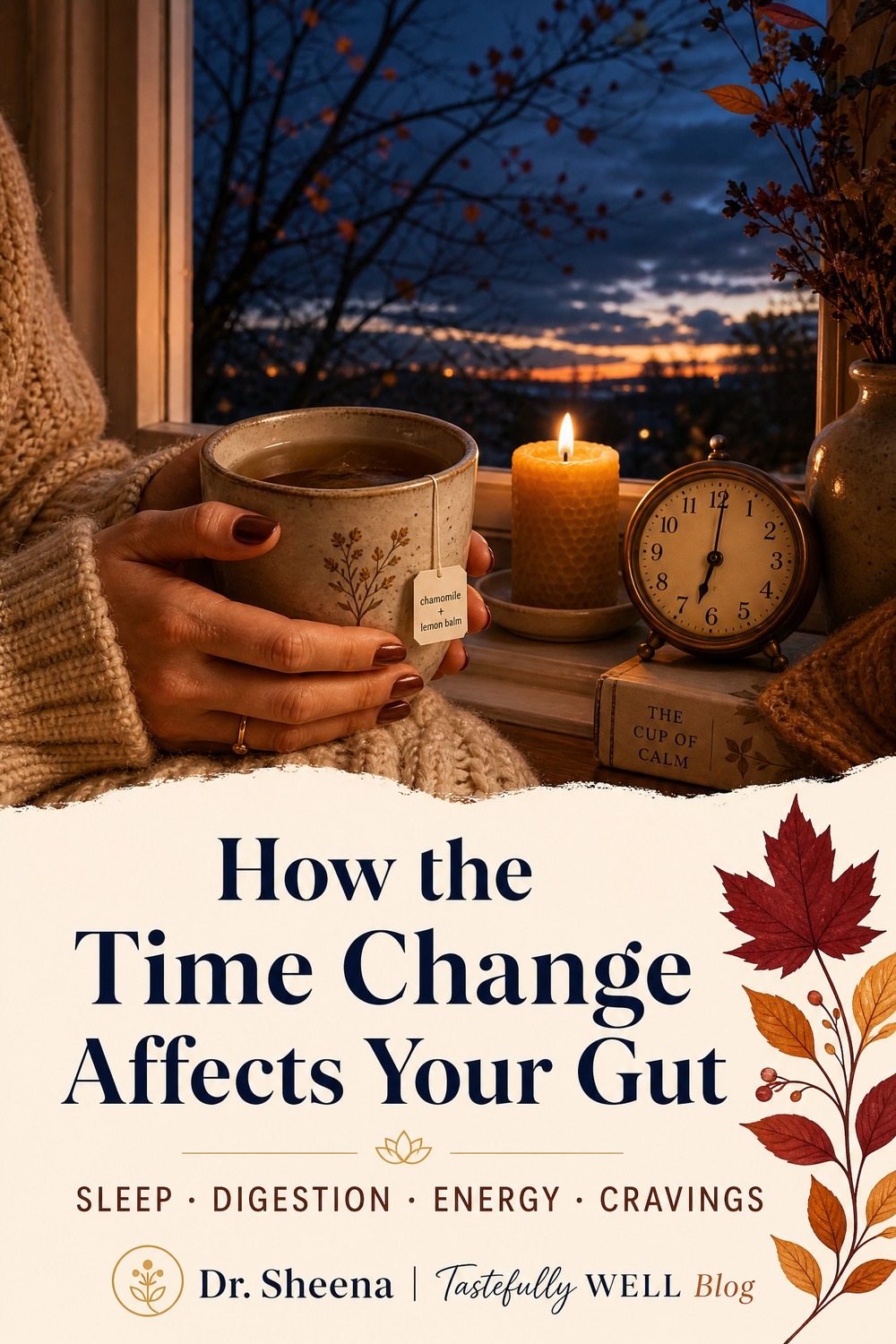
What Actually Happens in Your Body When the Clocks Change
Circadian Rhythm & Sleep -- Your internal clock takes real time to catch up.
Even though the change is only one hour, your body's master clock (set largely by light exposure) doesn't reset instantly.
Common effects in the first 1-2 weeks:
- earlier melatonin release, making evenings feel later than they are
- grogginess in the morning, even with a full night's sleep
- disrupted deep sleep cycles
Your body is trying to recalibrate.
Gut Motility & Digestion -- Your gut runs on the same internal clock as your brain.
Digestion follows circadian signals just like sleep does. When that rhythm shifts, so does:
- the timing of hunger and fullness cues
- bile and stomach acid release
- gut motility and regularity
This is a big reason bloating, sluggish digestion, or irregular bathroom habits tend to spike for some people right around the time change.
Blood Sugar & Cravings -- Less daylight changes more than your mood.
Reduced sunlight exposure is linked to lower serotonin production, and low serotonin drives cravings for quick-hit carbs and sugar.
Combine that with a disrupted sleep cycle (poor sleep alone increases next-day sugar cravings and insulin resistance), and the week after the time change becomes a setup for blood sugar swings that weren't an issue in October.
Energy & Mood -- Earlier darkness affects far more than "feeling tired."
Less light in the late afternoon and evening can lower serotonin and disrupt the natural cortisol curve your body relies on for steady energy. For some people, this is the earliest signal of seasonal mood shifts that tend to deepen as we move toward winter.

How to Support Your Body Through the Shift
You can't stop the clocks from changing, but you can help your body adjust faster:
- Get morning sunlight within the first hour of waking — even 10 minutes outside helps reset your circadian clock faster than any supplement.
- Keep meal times consistent, even if your schedule feels off. Regular meal timing is one of the strongest cues for resetting gut and hormone rhythms.
- Dim the lights in the evening. Bright artificial light after sunset confuses your body about what time it actually is — try lamps instead of overhead lights after dinner.
- Prioritize protein and fiber at breakfast to stabilize blood sugar early and reduce the intensity of afternoon cravings.
- Move your body earlier in the day if possible — afternoon exercise can shift your circadian rhythm later, which works against you this time of year.
- Give it two weeks. Most people fully adjust within 10-14 days. If sluggishness, bloating, or low mood linger longer than that, it's worth looking deeper.
When It's More Than Just the Time Change
For some people, this seasonal shift doesn't resolve on its own; the fatigue, bloating, or low mood linger well past those two weeks. That's often a sign of an underlying imbalance in gut health, blood sugar regulation, or hormone function that the time change simply exposed rather than caused.
